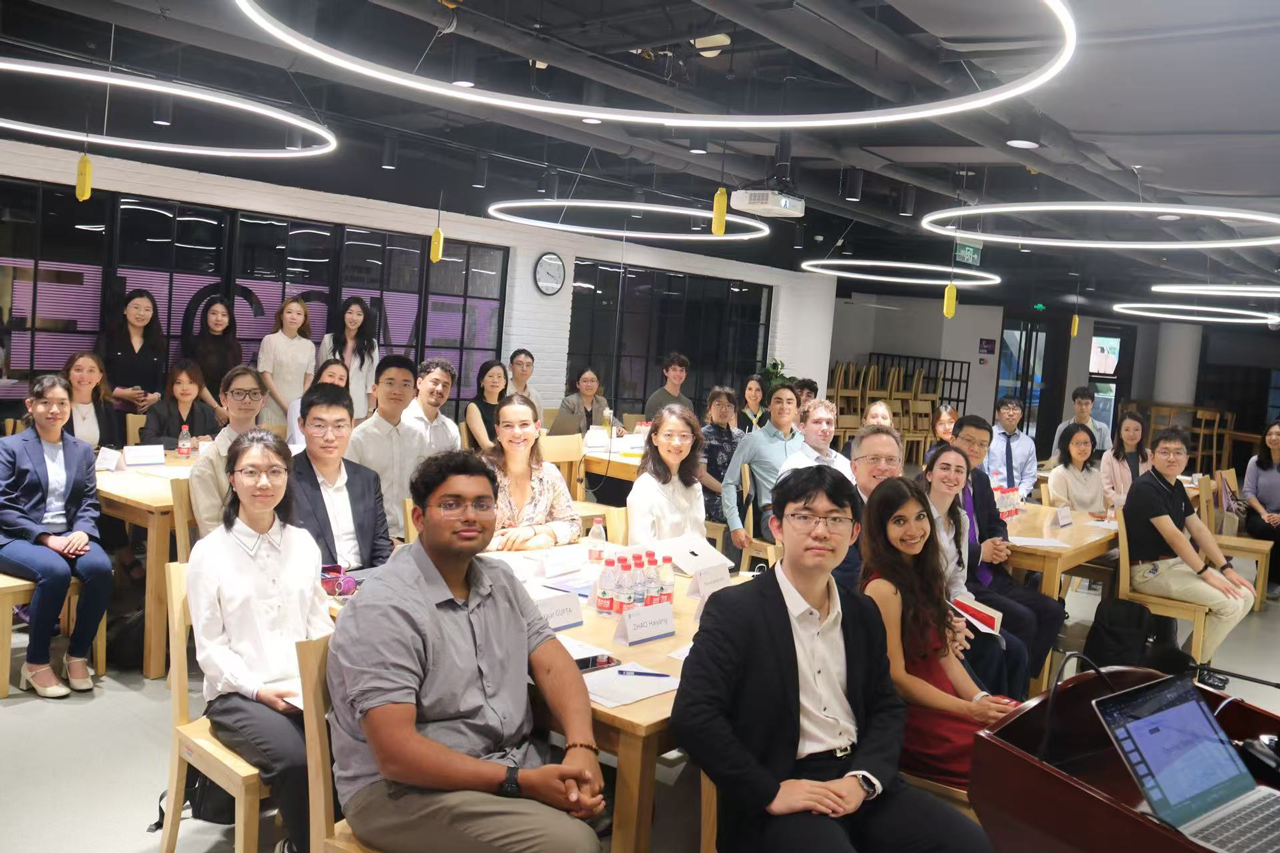
On May 19, 2026, the 2026 Spring Tsinghua-Georgetown Undergraduate Dialogue concluded successfully. The event was co-hosted by the Center for International Security and Strategy (CISS) at Tsinghua University and the Georgetown University Initiative for U.S.-China Dialogue on Global Issues. Themed “China-U.S. Youth Dialogue in a Changing World: Consensus, Divergence, and Pathways to Action”, this event aims to foster in-depth exchange and mutual understanding between young students from both countries on critical global issues, and to jointly explore actionable cooperation plans. Bringing together nearly 30 students from Tsinghua University and Georgetown University, the event facilitated deep discussions on four key topics: business and trade, AI and technology, peace and security, and global governance.
The dialogue program was officially launched in March this year, combining online and offline formats. The two sides held four online meetings on March 26, April 1, April 9, and April 22 respectively. During these online sessions, instructors from both sides introduced the program arrangements and participation guidelines, and guided students to enhance mutual understanding.
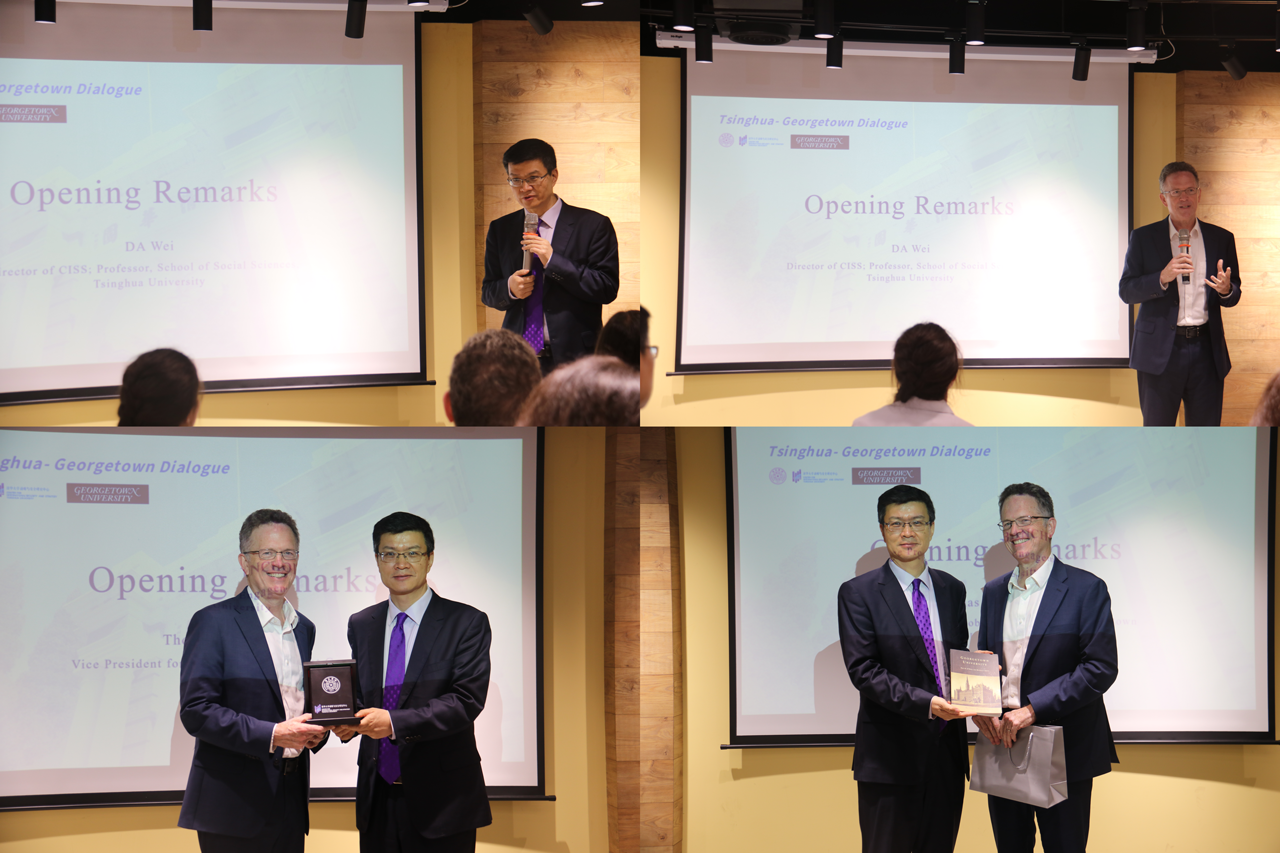
Professor Da Wei, Director of CISS, delivered a keynote speech titled “An Overview of Current China-U.S. Relations”, laying the groundwork for students to gain an in-depth understanding of the present bilateral landscape. In subsequent sessions, Dr. Ning Leng, Assistant Professor at the McCourt School of Public Policy at Georgetown University, Dr. Evan Medeiros of the Walsh School of Foreign Service at Georgetown University, and Professor Wu Riqiang of the Department of International Relations at Tsinghua University gave presentations on China-U.S. cooperation in global development, the China-U.S. presidential summit, and China-U.S. nuclear relations, respectively. Each speaker used guiding questions to stimulate deeper reflection among students. Discussions were conducted under the Chatham House Rule, allowing students to engage in open and candid exchanges across geographic and cultural boundaries.
From May 16 to 19, Professor Thomas Banchoff, Vice President of Georgetown University, led a student delegation to Tsinghua University for in-depth, in-person exchanges with Tsinghua faculty and students. Participants from both universities were divided into four groups, each focusing on a specific theme: Business and Trade, AI and Technology, Peace and Security, and Global Governance. Building on prior dialogues, the groups deepened collaboration and refined their proposals. The visit culminated in a joint presentation of outcomes on the afternoon of May 19, held in the underground activity room of the New Tsinghua Auditorium.
From May 16 to 19, Professor Thomas Banchoff, Vice President of Georgetown University, led a student delegation to Tsinghua University for in-depth, in-person exchanges with Tsinghua faculty and students. Participants from both universities were divided into four groups, each focusing on a specific theme: Business and Trade, AI and Technology, Peace and Security, and Global Governance. Building on prior dialogues, the groups deepened collaboration and refined their proposals. The visit culminated in a joint presentation of outcomes on the afternoon of May 19, held in the underground activity room of the New Tsinghua Auditorium.
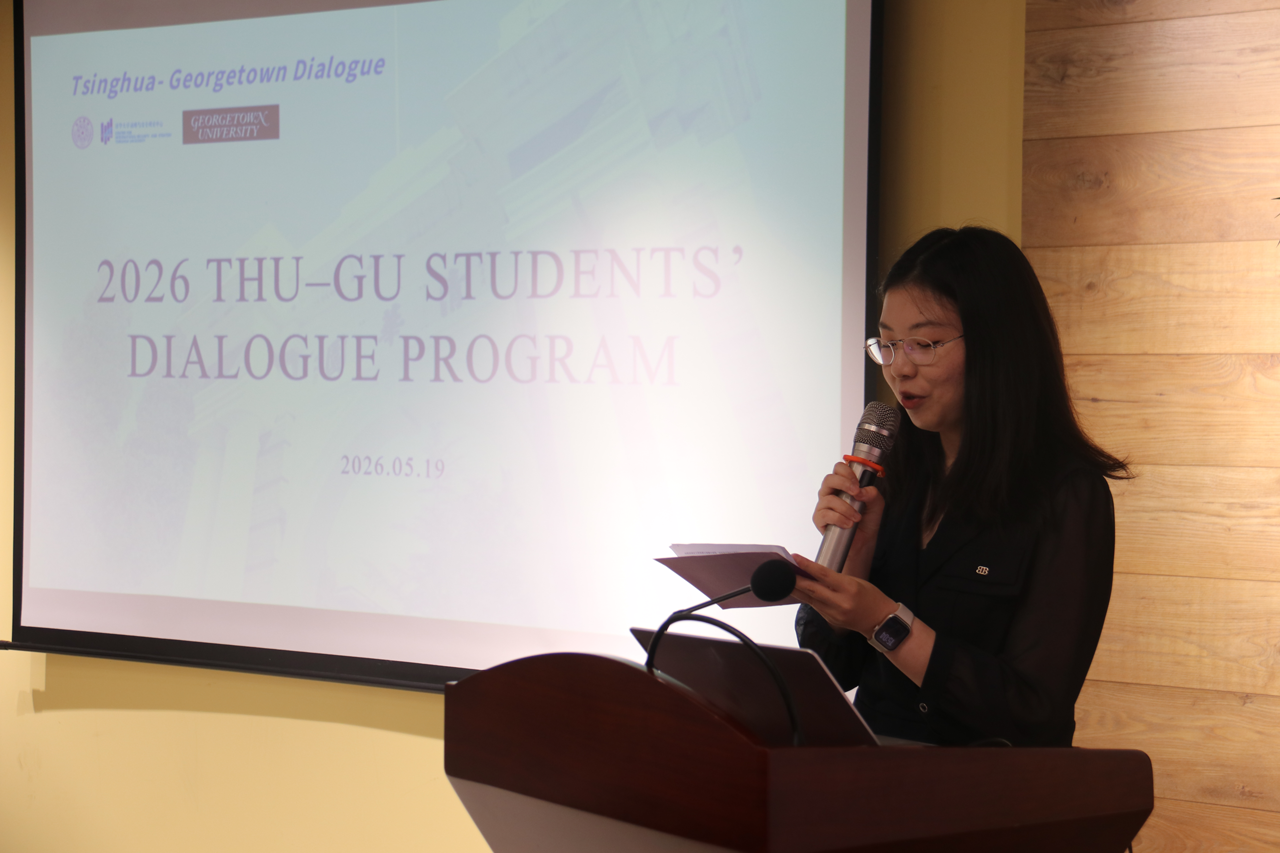
During the group presentation session, Shi Jiayi, Vice President of the Tsinghua University Student Association for China-U.S. People-to-People Exchange, served as the moderator. Four student groups took the stage in turn, each focusing on their chosen topic and employing a three-part structure of “Consensus – Divergence – Action” to conduct an in-depth analysis of the shared challenges and cooperative opportunities facing China and the United States in relevant fields. Their presentations culminated in concise, pragmatic policy recommendations, showcasing the profound insight and sense of responsibility that Chinese and American youth bring to global issues.Following each presentation, feedback was provided by Dr. Jodie Wen, Postdoctoral Fellow and Assistant Research Fellow at CISS; Professor Thomas Banchoff; Dr. Shi Yan, Fellow at CISS; and Mr. Xiao Qian, Deputy Director of CISS. Audience members and guests actively participated in the discussions, creating a dynamic and intellectually engaging atmosphere.
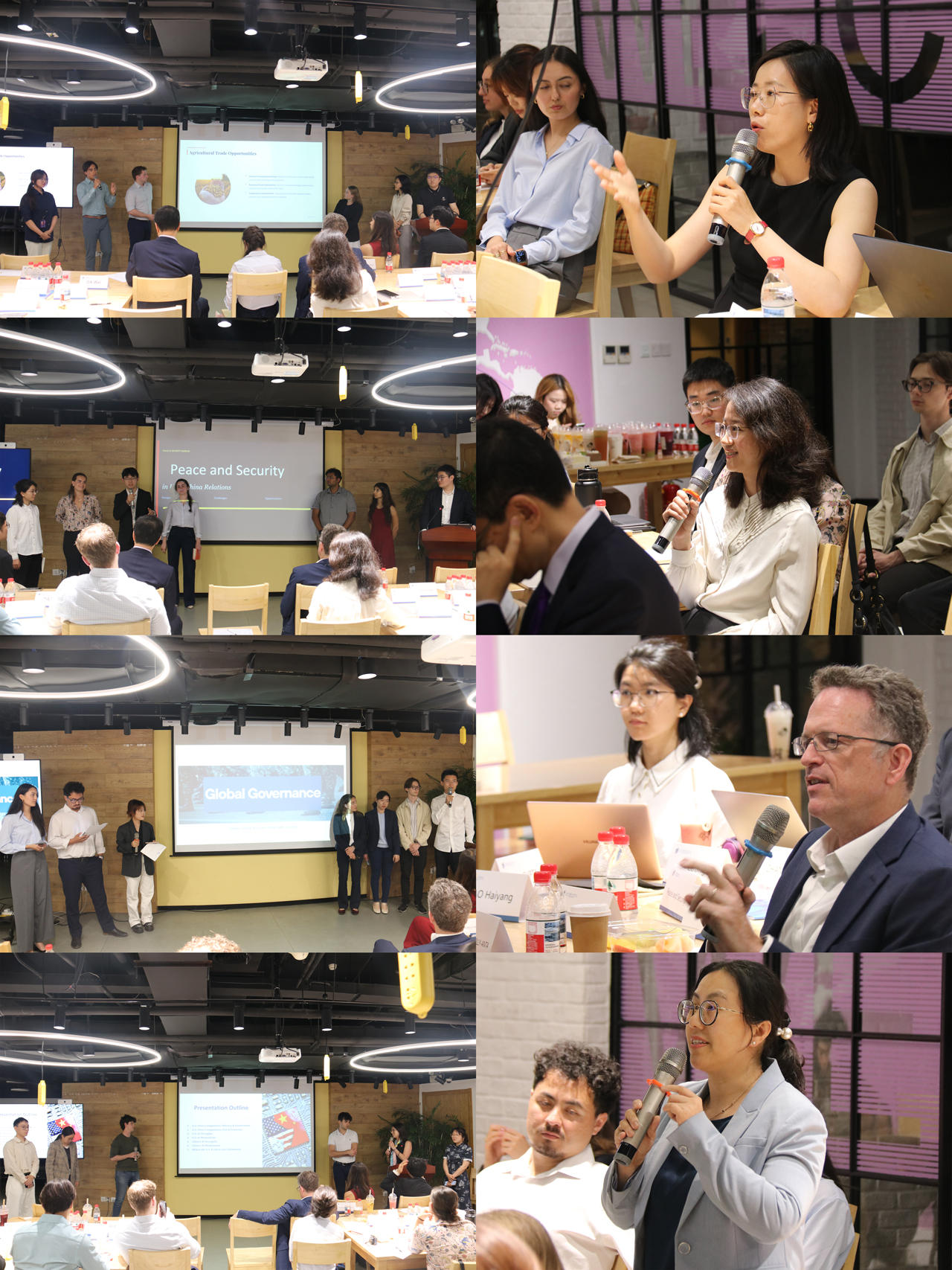
After all presentations concluded, Ms. Guo Jia, Director of International Exchange and Cooperation at CISS, delivered closing remarks. She highly praised the students’ performance and expressed confidence in the ability of Chinese and American youth to contribute innovative ideas and practical solutions to global challenges through dialogue and cooperation.
The event concluded with an award ceremony. All participants received certificates recognizing their commitment and contributions throughout the project. Based on votes cast by attending guests, the Global Governance team received the Best Group Presentation Award in recognition of the depth of its analysis, the quality of its cross-cultural collaboration, and the practicality of its policy recommendations.
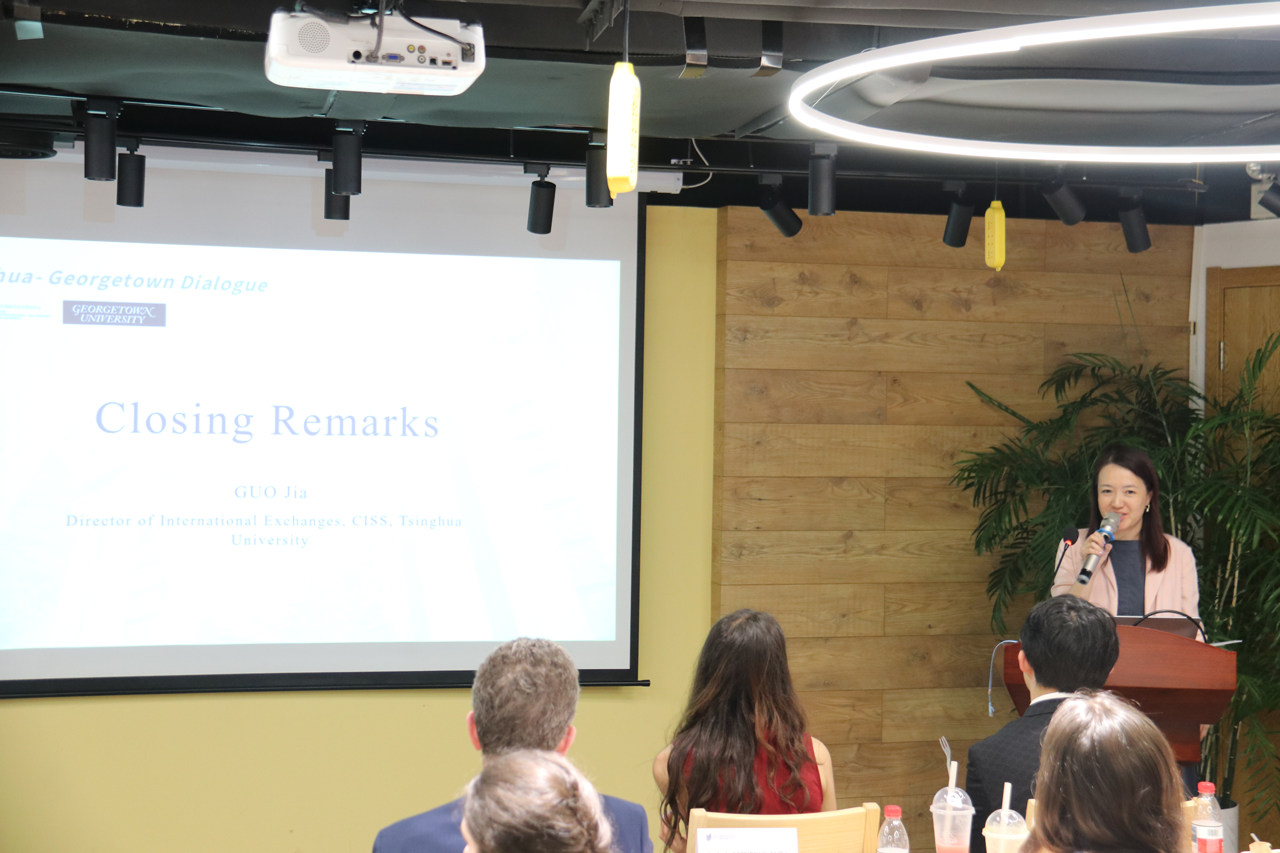
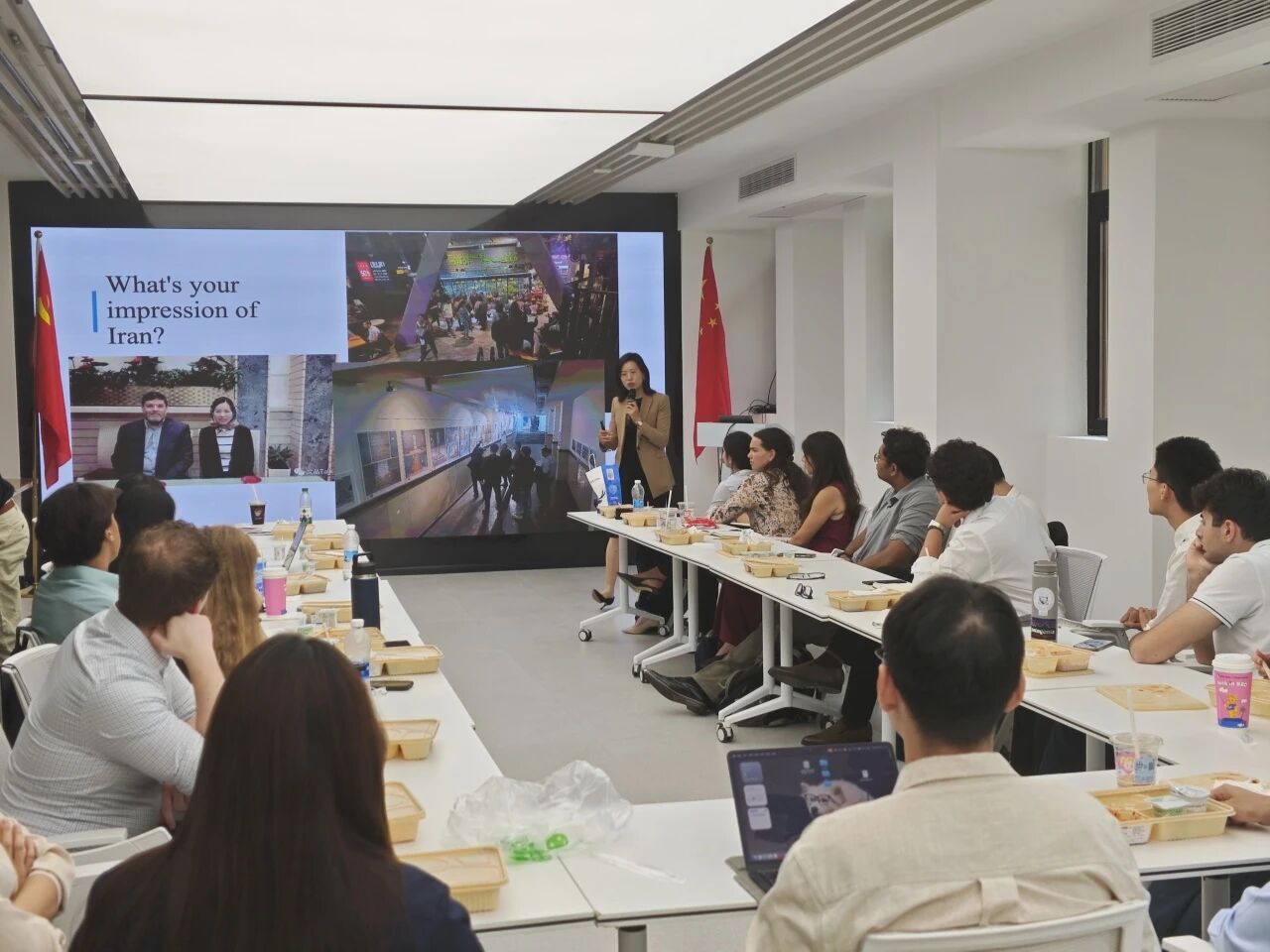
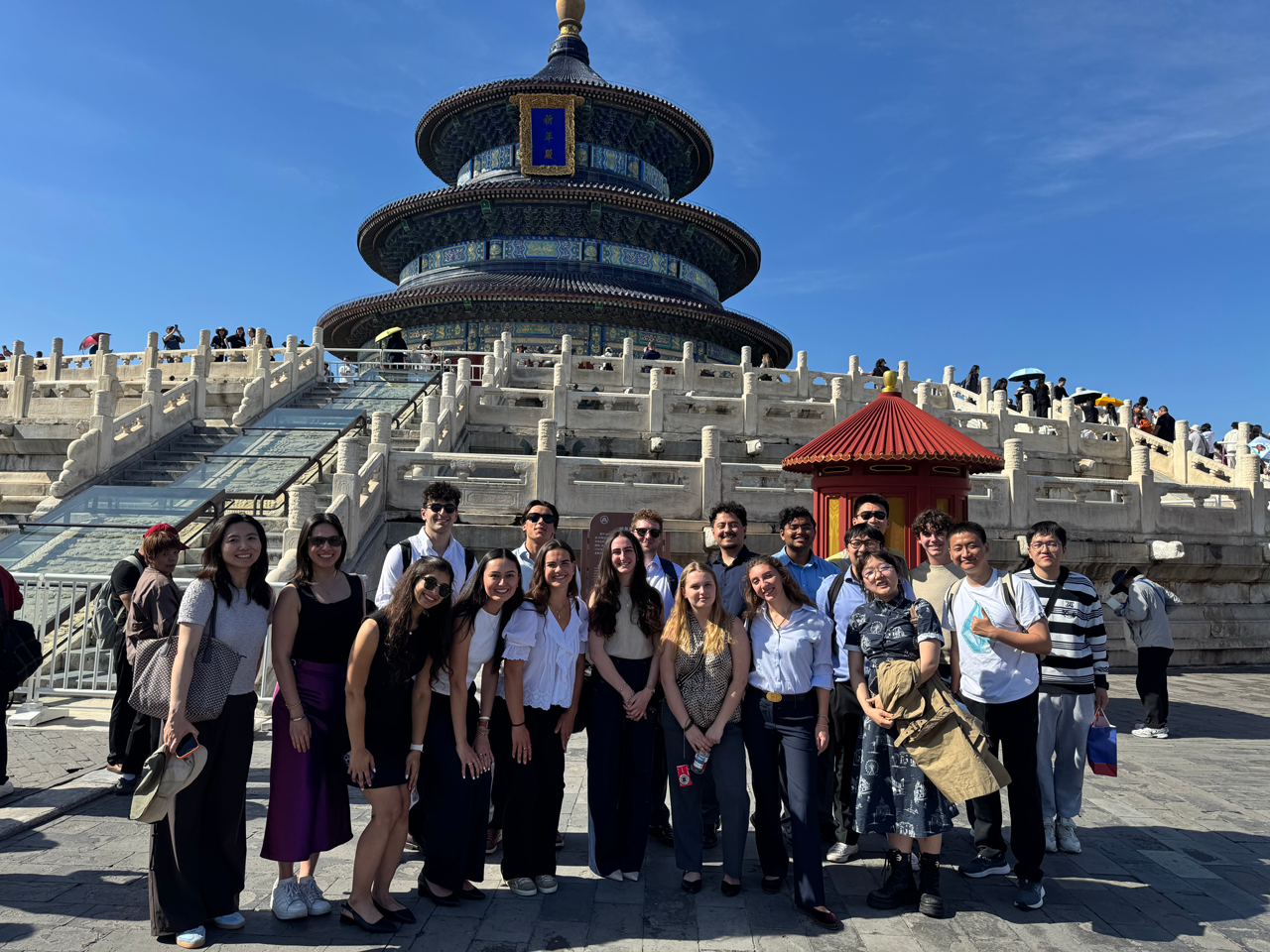
During their visit to China, members of the Georgetown delegation also participated in a series of cultural and experiential activities organized by CISS. On May 18, participants visited the Temple of Heaven, where they explored Beijing’s rich cultural heritage and reflected on the historical and cultural dimensions of China-U.S. engagement. On the morning of May 19, Georgetown students toured ROBOTERA, a leading Chinese robotics company, gaining firsthand insight into China’s innovation ecosystem and advances in emerging technologies. Later that day, Dr. Jodie Wen joined Chinese and American student representatives for lunch and delivered a lecture on developments in the Middle East, helping participants better understand regional dynamics as well as the respective approaches of China and the United States toward the region.
The dialogue featured a wide range of activities, including online discussions, policy-oriented research, corporate visits, cultural experiences, and collaborative presentations. A distinctive feature of the program was its “Consensus–Divergence–Action” framework, which encouraged students to move beyond dialogue and toward collaborative problem-solving. These interactions not only enriched intellectual exchange but also strengthened mutual understanding and friendship between participants from both countries.
Through sustained discussion, collaborative research, and practical engagement, the program enhanced participants’ understanding of global challenges and strengthened their capacity for leadership, collaboration, and responsible engagement in global affairs. The dialogue demonstrated the important role that youth exchanges can play in fostering mutual understanding and building constructive China-U.S. relations in an increasingly interconnected world.